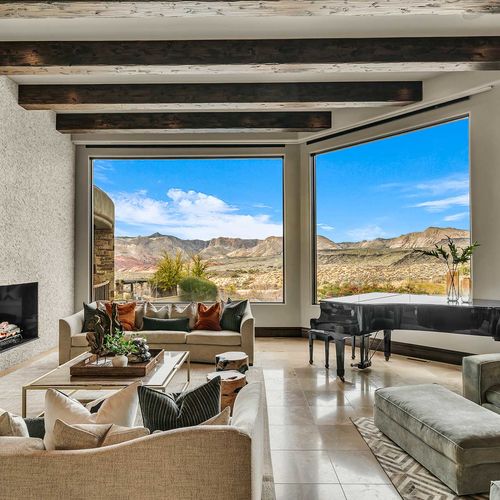





The St. George market has cooled from its post-pandemic frenzy, but calling it a soft market would be a mistake — Washington County is still drawing retirees, remote professionals, and second-home buyers at a pace that keeps well-priced homes moving. What has changed is that the margin for error is smaller now. Buyers who overpay because they skipped the neighborhood-level research feel it. Sellers who misprice or mistime a listing leave real equity on the table. And investors who treat Desert Color the same as Santa Clara, or assume Ivory Ridge behaves like the broader Washington city market, are working with an incomplete picture. The reality is that each of these communities operates differently — different buyer profiles, different price ceilings, different sensitivities to inventory shifts — and understanding those differences is what separates a smart move from a costly one. This guide is built around that kind of on-the-ground knowledge, not the broad Utah or national housing headlines that rarely reflect what is actually happening at the street level in Washington County. Whether you are a seller trying to figure out the right time to list, a buyer navigating HOA short-term rental restrictions or Southern Utah water usage considerations, or an investor trying to read neighborhood-level risk accurately, the answers you need are specific to this market. So what does it actually take to make a well-informed decision here, and where do most buyers, sellers, and investors tend to get it wrong?
What the Market Is Telling You Right Now
Washington County's housing market has settled into a steadier rhythm — not declining, but no longer the frantic seller's market that defined the 2021 and 2022 boom years. Homes are sitting longer, more options are available, and the gap between what sellers want and what buyers will pay has become measurable. That shift changes the rules for everyone involved.
Here are the numbers worth paying attention to right now —
- Typical home values near $522,000 — Values have held up well across Washington County overall, which tells you demand hasn't disappeared. It has simply become more selective.
- Median sale price around $507,000 county-wide — The median sale price sits at $507,104, which means buyers are consistently closing below the average list price. That gap is meaningful negotiating data.
- Roughly 4.7 months of inventory in St. George — This is the clearest sign of balance. A market under two months of inventory heavily favors sellers. At 4.7 months, buyers have real options and real time to make considered decisions.
- Longer days on market than during the boom — Homes go to pending in around 61 days, compared to the near-instant contract timelines of the peak years. Sellers who price ahead of that reality are the ones sitting on stale listings.
- Modest appreciation alongside softer list prices — The median list price is $548,333, yet 69.7% of sales are closing under list price. That spread between asking and selling is a direct signal that seller expectations are still catching up to where buyers actually are.
Taken together, these figures tell a specific story. Buyers are capable of negotiating in ways that simply weren't possible two or three years ago — not because the market is distressed, but because supply has normalized and urgency has faded. A well-qualified buyer who does the neighborhood-level research can now approach a purchase with confidence rather than desperation.
Sellers who understand this data can still come out ahead. Strong presentation, accurate pricing relative to recent comparable sales, and strategic timing around Washington County's seasonal demand patterns are what separate a successful listing from one that lingers. Pricing at $548,000 and hoping a buyer meets you there is a losing strategy when nearly 70% of transactions are closing below list. Pricing at a number the market can actually support — and presenting the home in a way that justifies it — is where sellers retain the most equity. Neither buyers nor sellers can afford to operate on instincts formed during the boom years, because the data no longer supports those instincts.
No source link or source content summary was provided, so no external linking can be added.
How Sellers Can Win in a Market That Rewards Precision
Overpricing a home in Washington County right now carries more risk than it did during the 2021–2022 run-up, when demand was strong enough to absorb almost any asking price. With nearly 70% of sales closing below list price and inventory sitting at roughly 4.7 months, the market has enough supply that buyers can — and do — walk away from anything that feels inflated. Pricing close to what comparable sales actually support gives a listing its best chance of holding value through the entire negotiation process.
Why the First Price Is the Most Powerful One
When a home hits the market, the first two weeks generate the most attention. Serious buyers — especially the retirees and remote professionals who make up a large portion of Washington County's demand — are often pre-approved, actively searching, and quick to notice when a price doesn't align with what else is available. A listing that comes in too high gets passed over during that critical window, and the longer it sits, the more leverage shifts toward buyers who start asking what's wrong with it.
Price reductions compound this problem in a specific way. Each cut signals to the market that the seller is chasing demand rather than leading it. Buyers who were on the fence often wait for the next reduction rather than making an offer, which extends days on market further. What started as an attempt to capture more equity frequently ends with a final sale price that falls below what an accurate initial price would have produced — because negotiating power erodes with every week a listing ages.
Getting the Timing Right
Late winter through early spring — roughly February through April — tends to be the strongest window for sellers in St. George. Buyer activity picks up as snowbirds finalize decisions, retirees plan relocations, and families targeting a summer move begin their searches in earnest. What makes this window particularly useful is that competing inventory hasn't fully built up yet. By May and June, more sellers have entered the market, which gives buyers more options and more room to negotiate.
Listing ahead of that inventory surge means fewer direct comparisons working against you. A well-priced home in March faces a thinner field than the same home listed in June, which directly affects how quickly offers come in and how much room buyers feel they have to push back on price.
Presentation and What St. George Buyers Actually Want
Outdoor living features carry real weight with buyers here in ways that don't apply in most other markets. Shaded patios, low-water desert landscaping, pools, and strong view corridors toward the red rock formations are genuine selling points — not cosmetic extras. These features speak directly to the lifestyle that draws people to Southern Utah, and homes that photograph well with these elements consistently generate stronger early interest.
Washington Fields, for example, attracts buyers who want newer construction with larger lots and outdoor entertaining space. A home in that area that is professionally photographed to highlight its covered patio and backyard setup — and priced within five percent of recent comparable sales — moves noticeably faster than one that leads with interior square footage alone.
Tailoring the strategy to the specific neighborhood, the property's strongest features, and the buyer most likely to purchase it is what separates a precise listing from a generic one.
Since no source link or source content summary was provided, I cannot add any external linking. Here is the original section text unchanged:
How Buyers Can Compete Without Overpaying
Buyers who felt frozen out during the 2021–2022 frenzy now have something they didn't before — time. With inventory sitting at roughly 4.7 months across Washington County and nearly 70% of sales closing below list price, the pressure to waive inspections or pile on escalation clauses has largely lifted. That breathing room is real, and capable buyers who use it strategically are in a genuinely strong position.
That said, not every home in Washington County is sitting idle. A well-priced home in a sought-after neighborhood — think Santa Clara with its established feel or Desert Color with its resort-style amenities — can still draw multiple offers within days of hitting the market. Being prepared isn't the same as being reckless, and the buyers who win in those situations aren't the ones who panic-bid. They're the ones who already did their homework before the listing went live.
Here's how to approach this market with confidence —
- Get fully pre-approved before you start seriously shopping. A pre-qualification letter isn't enough when you're competing against retirees paying cash or second-home buyers who've already sold elsewhere. A full pre-approval — where the lender has verified income, assets, and credit — signals to sellers that your financing is solid. It also forces you to know your actual ceiling before emotions get involved, which keeps your offers disciplined.
- Structure your offer terms around the seller's situation, not just the price. Cash buyers and second-home purchasers often win on certainty rather than dollars. You can match some of that certainty by offering a flexible closing date that works for the seller, keeping contingencies tight and reasonable, and avoiding requests that add friction — like asking for appliances or repairs that aren't material to the purchase.
- Target homes where negotiation room actually exists. Newer subdivisions with multiple similar floorplans — particularly in areas like Washington Fields where builders are still active — give you real leverage. When a resale home is competing directly against new construction with builder incentives like rate buydowns or closing cost credits, sellers are more motivated to work with you on price or terms.
- Use non-price strengths to stand out. A shorter due diligence period, proof of funds for your down payment, or a personal letter explaining your timeline can shift a seller's preference without adding a dollar to your offer. Sellers who have already found their next home often care more about a smooth, predictable close than squeezing out an extra $5,000.
- Read the full cost picture before committing. HOA fees in communities like Desert Color can run several hundred dollars monthly, and some associations carry strict restrictions on short-term rentals that directly affect investment value. Southern Utah's desert climate also means higher cooling costs through summer. The headline price on a listing rarely tells the whole story.
A buyer targeting a home priced between $450,000 and $600,000 in a neighborhood like Ivory Ridge has real options right now. Rather than stretching to match a competing offer, that buyer can submit at or near list price with a 21-day due diligence window, a closing date that matches the seller's move-out timeline, and a pre-approval letter from an underwriter — not just a loan officer. That combination often outperforms a higher offer with messy contingencies attached.
Winning in this market comes down to preparation and discipline, not simply outbidding everyone else. Buyers who show up organized, informed about the specific neighborhood they're targeting, and flexible on the terms that matter to sellers are the ones closing on the homes they actually want.
Why One St. George Market Is Really Several Different Markets
Zip codes and county-wide medians tell you something, but they don't tell you enough. Washington County is better understood as a set of distinct neighborhood markets, each with its own buyer pool, pricing logic, and resale behavior — and treating them as interchangeable is where most pricing and investment mistakes begin.
St. George and Washington City Core
The St. George and Washington City core functions as the baseline against which everything else gets measured. Buyers here tend to be practical — they want established infrastructure, proximity to services, and homes that don't require a renovation project before move-in. "Buyers continue to show a willingness to meet current pricing levels, particularly for well-maintained, move-in-ready homes," which holds especially true in this corridor. Pricing pressure is steady rather than dramatic, and homes that come in accurately priced against recent comparable sales still generate genuine interest within the first few weeks on market.
Santa Clara
Santa Clara operates on a different set of motivations entirely. Buyers drawn to this area are largely chasing a specific way of living — direct access to Snow Canyon State Park, quieter streets, and neighborhoods that feel settled rather than freshly built. Updated single-story homes with low-maintenance desert landscaping tend to hold their value well here because the buyer profile skews toward retirees and second-home purchasers who are willing to pay for the right fit. That selectivity cuts both ways — homes that don't match the lifestyle expectations of that buyer pool tend to sit longer, regardless of price.
Newer HOA Communities Like Ivory Ridge
Resale homes inside newer HOA communities like Ivory Ridge face a competitive dynamic that doesn't exist in older neighborhoods — they are constantly being evaluated against active builder inventory. When a buyer can walk into a sales office and get a brand-new home with a rate buydown or closing cost credit attached, a resale home has to justify its price on condition, lot position, or upgraded finishes alone. Sellers in these communities who price at or above new construction without a clear differentiator are fighting an uphill battle, while buyers in the same area have genuine leverage that simply doesn't exist in more established parts of the county.
Desert Color
Desert Color is its own category. The lagoon amenity, combined with HOA policies that permit nightly rentals in designated zones, draws a buyer profile that is explicitly investment-aware — many purchasers here are running the numbers on short-term rental income alongside long-term appreciation. Ongoing new releases from builders also mean that resale homes compete directly against fresh inventory with full builder warranties, which keeps pricing pressure real and consistent. Investors who understand the rental permission structure and factor in HOA fees accurately can find strong opportunities here, but those who skip that analysis often find the returns don't match expectations.
Treating county-wide data as a pricing guide for any one of these neighborhoods produces a distorted picture. The median sale price for single-family homes reaching $530,000 — up from $510,000 one year ago — reflects the county broadly, but that figure masks the meaningful spread between what drives value in Santa Clara versus what drives it in Desert Color.
Who Is Shaping Prices and Negotiating Power Across Washington County
Beyond the differences between neighborhoods, the buyer driving demand in any given area has just as much influence on price behavior as the location itself. Knowing which buyer group is most active near a property you're selling — or competing against as a buyer — is what actually determines how much leverage you hold at the negotiating table.
- Retirees — This group remains one of the most consistent sources of demand across Washington County, particularly for single-story homes with minimal yard maintenance and strong views toward the red rock terrain. What gives them sustained buying power is straightforward — many arrive with equity pulled from higher-cost markets in California, Nevada, and Arizona, which means mortgage rate sensitivity is lower for them than for a first-time buyer financing the full purchase price. Their demand concentrates most visibly in Santa Clara and the established parts of St. George, where settled neighborhoods and proximity to medical services align with their priorities. Homes that fit this profile — single-level, low-maintenance, well-positioned on the lot — tend to move faster and hold closer to list price because the buyer pool for them is both motivated and financially capable.
- Second-home and luxury buyers — The upper end of Washington County's market has stayed more resilient than many markets nationally, and this group is a primary reason why. These buyers are targeting resort-style communities, elevated lot positions with unobstructed views, and properties that function as a genuine lifestyle asset rather than just a place to sleep. Desert Color's lagoon community and high-view custom home sites around St. George draw this segment consistently. Because these buyers are often not dependent on financing at all — or are using it selectively — rate increases don't shift their behavior the way they affect conventional buyers. Their presence keeps premium properties competitive and compresses days on market at price points above $700,000 where other buyer groups thin out.
- Remote professionals — Younger buyers relocating from higher-cost metros are specifically targeting newer construction with dedicated office space, fiber internet access, and quick routes to both daily conveniences and outdoor recreation. Washington Fields and newer phases within Ivory Ridge attract this group because the homes are built to current standards and the surrounding infrastructure supports a work-from-home lifestyle. These buyers are rate-sensitive in a way that retirees and second-home purchasers are not, which means their activity fluctuates more visibly with rate movements — but when rates stabilize or dip, they re-enter quickly and create concentrated competition in the $450,000 to $600,000 range.
Sellers who identify which of these groups is most likely to purchase their specific home can sharpen every part of their listing strategy — from the features they highlight in photos to the price point they anchor to. A single-level home near Snow Canyon should be marketed around the lifestyle it delivers to a retiring buyer, not positioned generically against newer construction that appeals to a completely different audience.
Competing as a buyer means recognizing that the field looks different depending on where you're searching. Rate-sensitive remote professionals create surges of competition in newer subdivisions when borrowing costs ease, while cash-equipped retirees keep steady pressure on well-maintained single-story homes regardless of rate conditions. Washington County's median days on market sits at 64 days, but that figure masks real variation — the right home in the right neighborhood for the right buyer group moves considerably faster than the average suggests.
The Local Details That Can Make or Break a Smart Deal
Governance documents, water policy, and zoning designations rarely make headlines, but in Washington County they directly shape what a property costs to own, what you can do with it, and who will want to buy it from you later.
HOA Rules, CC&Rs, and Short-Term Rental Reality
Nightly rental income is one of the most common reasons investors target communities like Desert Color — but that income potential is only real if the governing documents actually permit it. "The absolute first step is a thorough review of your HOA's CC&Rs, Bylaws, and Rules," and that step cannot be skipped or delegated to assumption. An HOA can legally restrict or prohibit short-term rentals through its governing documents, which means a community that appears investor-friendly on the surface may have restrictions buried in an amendment recorded years after the original CC&Rs were filed.
What makes Desert Color particularly complex is that rental permissions can differ from one phase or pocket to the next. Two homes on adjacent streets within the same master-planned community may fall under entirely different governing documents — one permitting nightly rentals outright, another imposing minimum lease terms or defining residential use in ways that effectively block them. Verifying the specific parcel's rules directly, rather than relying on what a neighbor or listing description suggests, is the only way to get an accurate picture. "Ignorance of the rules is not a valid defense" when an HOA moves to enforce restrictions against a new owner.
Water Use, Xeriscaping, and the True Cost of Ownership
Southern Utah's desert climate creates an ownership cost that buyers frequently underestimate — irrigation. Maintaining a conventional grass lawn in St. George through the summer months carries a water bill that can run significantly higher than what buyers coming from cooler climates expect. The Washington County Water Conservancy District has consistently pushed for low-water landscaping conversions, and that pressure is only increasing as regional water supply concerns grow. Some HOAs have already updated their CC&Rs to require or incentivize xeriscaping, and more are likely to follow.
Low-water design — native plantings, decomposed granite, drip irrigation systems — isn't just a conservation measure. It reduces monthly operating costs and, increasingly, it's what buyers in this market expect to see. A home with a water-conscious yard requires less maintenance, carries lower utility exposure, and appeals directly to the retiree and second-home buyer profiles that dominate demand in Santa Clara and similar neighborhoods. Investing in that conversion now, or buying a home that already has it, positions the property more favorably for resale.
Why Hyper-Local Rules Shape Resale Flexibility and Long-Term Value
Purchase price is one number. The full picture includes HOA fees, nightly rental permissions, city zoning classifications, and the likelihood that any of those factors shift before you're ready to sell. A community that permits short-term rentals today could move to restrict them if a supermajority of homeowners — often 67% or 75% as specified in the documents — votes to amend the CC&Rs. That kind of policy shift directly affects resale value for investment-oriented buyers.
Working with a team that tracks these details at the neighborhood level means fewer surprises after closing. Our agents review governing documents, flag zoning inconsistencies, and identify water-related cost exposure before clients commit — because the risks that hurt buyers most are almost always the ones that weren't visible in the listing.
Final Thoughts
The St. George market is forgiving enough to reward a well-thought-out approach, but it will expose you quickly if you're guessing. That's the honest reality of Washington County real estate right now, and it's worth keeping front of mind whether you're selling, buying, or holding an investment property here.
What this guide has laid out is straightforward - micro-markets like Santa Clara, Washington, Desert Color, and Ivory Ridge don't behave the same way, and treating them as if they do is where most people lose money or miss opportunity. Seller timing matters. Pricing for equity capture rather than just a fast close matters. And for buyers, knowing the HOA rules around short-term rentals or understanding Southern Utah's water usage considerations before signing anything can save you from expensive surprises down the road.
Retirees, remote workers, and second-home buyers continue to shape demand across the county in ways that national housing data simply won't tell you. That's exactly why neighborhood-level knowledge carries so much weight here.
If you're a homeowner, the information in this article gives you a clearer picture of where your equity stands and how to protect it. If you're a buyer or investor, you now have a more capable foundation for making decisions that actually fit the Washington County market rather than a generic version of it.
The next step is yours - reach out to a local St. George real estate team with real on-the-ground experience, and put this knowledge to work.
Check out this article next